

Infrared Electrical System Surveys

As a DIYer or seasoned electrician, you probably know that electrical system failures rarely happen without warning, but these signs can go unnoticed until it’s too late. When electrical failures happen, you may experience equipment downtime, rising repair costs, fire hazards or arc flashes.
While routine maintenance helps detect and prevent these issues, some problems develop where they’re harder to catch with the naked eye. That’s where infrared (IR) electrical system surveys come in. These inspections use thermal imaging to detect signs of electrical stress without disrupting your system or taking anything apart.
What Is an Infrared Electrical System Survey?
An infrared electrical system survey is a technique for checking the health of your electrical infrastructure. These surveys use infrared thermography, which allows trained technicians to interpret and diagnose hot spots across electrical components.
Electrical components emit heat when operating. Under normal conditions, that heat stays within a predictable range. However, when a connection starts to loosen or current flow becomes uneven, the temperature can rise. These changes may not be visible to the eye, but infrared cameras can pick them up, providing a thermal image highlighting these hot spots.
An IR electrical inspection is noncontact and nondestructive. Technicians don’t need to disconnect power or take apart equipment to get readings since they use scanners or cameras to detect temperature differentials. This process allows you to continue with your operations undisturbed.
What Equipment Gets Scanned During an Infrared Electrical Inspection?
Infrared electrical inspections apply in any environment where electrical reliability matters. They may be more valuable for high-load systems to help identify hotspots before an electrical failure occurs.
At Lippolis Electric, our certified technicians use infrared testing equipment to inspect the following systems:
- Utility substations
- Transformers
- Feed poles
- Capacitor banks
- Generator controls and transfer switches
- Mainline panels
- Main switchboards and disconnects
- UPS equipment
- Lighting and receptacle panels
- Service disconnects for motors
Benefits of Electrical Infrared Testing
When you think about maintaining electrical systems, you may focus on what’s immediately visible or audible. You may check a tripped breaker or a flickering light or be concerned when a machine doesn’t start. These issues may point to early system failure, so inspections allow technicians to catch these warning signs.
When you invest in the infrared scanning of electrical equipment, the inspections can support the system’s health, safety and performance.
Here’s how regular inspections can add value to your system:
- Reduces unplanned downtime: Unexpected electrical failures can put your operations on hold. However, when you schedule maintenance during planned service windows, you can minimize disruptions and keep your operations on track.
- Eliminates service interruption: Technicians conduct infrared testing while systems are in use. There’s no need to shut down machines or wait until after hours. Technicians use infrared cameras to scan everything without having to pause your workflow.
- Lowers repair costs: Infrared helps pinpoint minor irregularities that may be corrected by tightening a terminal, replacing a single part or rebalancing a load. This prevents the issue from causing damage.
- Contributes to insurance savings: Some insurance providers may recognize infrared testing as a sign of responsible facility management, which may help support claims processing. A record of regular thermal inspections can demonstrate a clear commitment to minimizing electrical risk.
- Promotes safety: Overheating components, exposed conductors and degraded insulation can pose risks to people nearby. Regular infrared inspections allow you to safeguard your team by preventing electrical fires, arc flashes and short circuits.
- Improves system reliability and performance: By identifying and resolving hidden issues, you improve the reliability of your system. Machines operate more smoothly, processes are more predictable and power delivery becomes reliable.
- Supports compliance: Infrared inspections align with the National Fire Protection Association’s Standard (NFPA) 70B, which recommends thermographic scanning as part of an electrical maintenance program. This helps organizations comply with these codes and create a safer environment for employees.
Common Problems Detected During an Infrared Thermography Electrical Inspection
When a system runs smoothly, you may assume every other component works as expected. However, electrical issues may be too minor to notice during a walk-through or routine visual inspection.
Typical problems detected during an infrared electrical survey include the following:
- Loose connections: This issue can cause resistance that generates heat. This extra heat can wear down components, hinder energy flow and contribute to failure. A thermal scan will often show noticeable hot spots, flagging the need to tighten connections.
- Overloaded circuits: Circuits are designed to carry a specific electrical load. When demand starts to exceed that safe limit, heat builds up. Overloaded circuits can reduce system performance and overheating. Infrared testing identifies these stress points, making redistributing loads or upgrading equipment possible.
- Faulty or aging equipment: Wear and tear are natural occurrences for constant-use components. However, issues like aging parts, defective breakers or deteriorated insulators may go unnoticed. Thermal scans pick up irregular heating patterns that signal malfunction or inefficiency so you can plan for replacements.
- Ineffective breaker and wire crimps: Poor crimping causes unreliable contacts, leading to overheating.

Electrical Infrared Inspection Services
At Lippolis Electric, we believe in leaving no questions unanswered, so every inspection includes clear reporting. You get a full breakdown of what was scanned, what was detected and our recommendations. We also maintain detailed records you can use for insurance documentation, safety audits or ongoing maintenance planning.
While heat is our main signal, our technicians can identify these additional contributing factors:
- Presence of moisture
- Harsh weather damage
- Overloaded electrical systems
- Loose electrical wiring
- Compromised insulation
How Often Do You Need Infrared Inspections?
According to NFPA 70B, infrared inspections should be conducted annually for commercial and industrial facilities. For operations with high electrical loads, more frequent inspections may be warranted. You can schedule bi-annual inspections, ideally in summer and winter.
Different seasons bring different electrical loads and environmental conditions. Examining seasonal variations can give us a more complete view of your system’s performance under different loads.
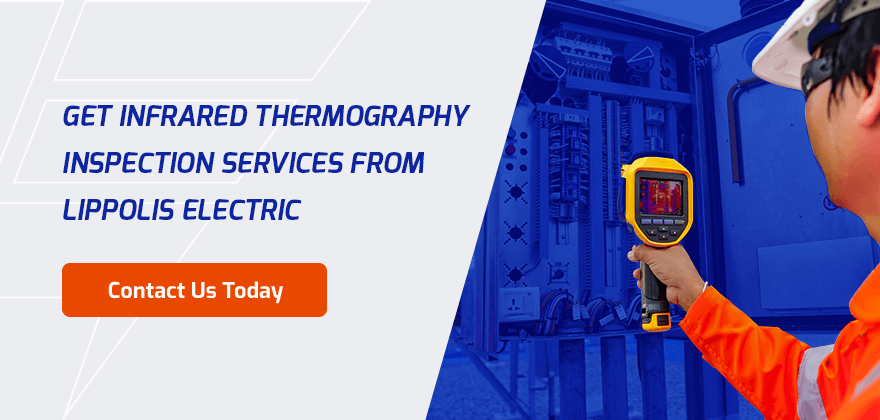
Get Infrared Thermography Inspection Services From Lippolis Electric
If you’re looking for reliable, professional electricians for infrared inspections in Westchester, Putnam or Dutchess counties, we can help. Lippolis Electric has served residential and commercial customers for over 40 years. We are family-owned and locally operated, and our technicians are trained regularly on industry best practices.
When you work with us, you partner with a company that takes the time to understand your system and respects your space. We pride ourselves on being neat, courteous and responsive, and we believe no job is too big or small.
We offer ultrasonic testing services, visual inspections and asset management support alongside our electrical survey.
Contact us today to schedule your inspection.
Schedule service
Please note that your appointment is not set until confirmed by Lippolis Electric shortly after you've submitted the form.
| ‹ | › | |||||
| Sun | Mon | Tue | Wed | Thu | Fri | Sat |